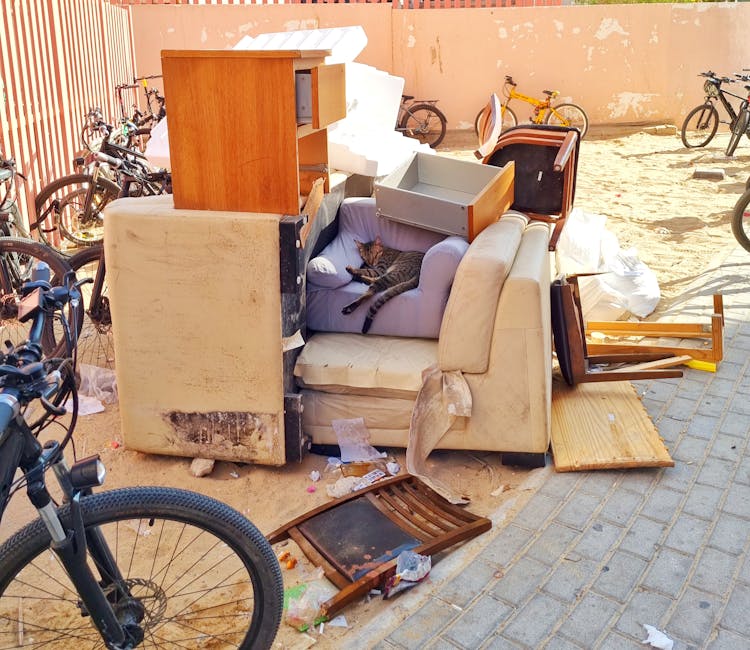



Furniture disposal rules in SE14: what Lewisham accepts
Posted on 30/07/2026
If you are trying to get rid of an old sofa, a broken wardrobe, or a mattress that has absolutely had enough, the rules can feel oddly specific. That is especially true in SE14, where space is tight, stairwells are narrow, and the wrong disposal choice can mean delays, extra cost, or a very awkward conversation with the landlord. This guide explains Furniture disposal rules in SE14: what Lewisham accepts, how the process usually works, what counts as bulky waste, and the practical options that actually make sense when you need the item gone without drama.
We will keep it plain-English and local. No fluff. Just the kind of advice that helps you decide whether to book a collection, reuse the item, move it into storage, or arrange a proper removal. If you are also planning a move, you may find it useful to read our guide on how to declutter before moving and the practical notes on cleaning before you move out. Those two often save people more stress than they expect. Funny how the small jobs turn into the big ones, isn't it?
Why Furniture disposal rules in SE14: what Lewisham accepts Matters
Furniture disposal is not just a housekeeping task. In SE14, it touches on safety, access, neighbours, recycling, and in many cases moving day logistics. A bulky item left on a pavement can become an obstruction pretty quickly, especially around flats, shared entrances, or parking pinch points. In practical terms, the difference between doing it properly and doing it casually can be the difference between a smooth clear-out and a messy fine-risk situation.
It also matters because furniture is not one-size-fits-all waste. A wooden table, a fabric sofa, a metal bed frame, a desk, a bookcase, and a mattress are all handled differently. Some can be reused, some can be recycled in part, and some may need special bulky-waste handling. If you are leaving a flat and trying to recover a deposit, the standard is usually higher than people think. Estate agents and landlords tend to notice skips, loose screws, stained mattresses, or items abandoned in common areas. They notice the smell too, to be fair.
There is also a sustainability angle. Lewisham residents are generally better off thinking about reuse before disposal. If an item is still structurally sound, it may be better to pass it on, store it temporarily, or arrange a collection route that keeps it out of landfill. If you are weighing up those choices, our page on recycling and sustainability is a good companion read.
How Furniture disposal rules in SE14: what Lewisham accepts Works
In broad terms, furniture disposal in Lewisham tends to fall into four practical routes:
- Reuse if the item is usable and clean enough to pass on.
- Bulky-waste collection if the item is too large for normal household bins.
- Household recycling or waste centre routes where accepted, usually by separating parts.
- Private removal or clearance support when access, timing, or volume makes council options awkward.
The exact acceptance rules can vary by item type and by condition. For example, a wardrobe made from mixed materials might be accepted only if it can be broken down into manageable parts. A mattress may need a specific collection route because it is bulky, awkward, and not the sort of thing you want on the pavement at 7am in the rain. A sofa may be accepted, but only if it is booked correctly and presented as instructed.
One thing people often miss: acceptance is not only about the object itself. It is also about how it is set out. Items generally need to be ready for collection, safely accessible, and not blocking communal walkways. If you are in a block with tight stairs, shared hallways, or limited loading space, planning matters a lot. Our article on moving in SE14 flats with tight stairwells is useful background if you are trying to remove heavy pieces from upstairs without chaos.
As a rule of thumb, Lewisham-style bulky waste arrangements are best used when the furniture is:
- too large for normal refuse collection,
- safe to lift and move by one or two people only with care,
- booked in advance where required,
- not contaminated with hazardous material, and
- placed exactly as instructed for collection.
If any of those conditions are not met, it is usually worth choosing a different route. That sounds obvious, but on move-out week the obvious stuff gets forgotten first.
Key Benefits and Practical Advantages
Following the local furniture disposal rules properly gives you more than just compliance. It gives you breathing room. You know the item is dealt with, the flat is clearer, and the move itself feels less like a game of Tetris played in a narrow hallway.
Here are the real advantages:
- Less risk of fines or complaints from leaving items in the wrong place.
- Better deposit protection if you are moving out of a rented property.
- Cleaner access routes for removals, cleaners, and key handover.
- Improved recycling outcomes when reusable materials are separated properly.
- Lower lifting risk if you plan disposal alongside a removal route rather than improvising.
There is also a mental benefit, and honestly it is not small. A flat feels lighter once the bulky stuff is gone. The room stops looking half-finished. You can see the floor again. You can move boxes without trying to dodge a dead sofa leg in the dark. That matters on a practical level, but also on a human one.
If your clear-out is part of a bigger move, take a look at how to move house with less stress. The article is not about disposal rules specifically, but it helps connect the dots between decluttering, lifting, packing, and the actual moving day.
Who This Is For and When It Makes Sense
This topic is relevant to quite a few people in SE14. In practice, it usually matters most if you are:
- moving out of a rented flat and need to leave bulky items behind properly,
- replacing old furniture and want the outgoing piece removed without hassle,
- clearing a student property at the end of term,
- emptying a home office, spare room, or storage-heavy flat,
- helping a relative sort through older furniture after a move, or
- trying to reduce clutter before a sale, renovation, or re-let.
It also makes sense when the item is awkward, heavy, or hard to dismantle. Think of a three-seater sofa that barely turns the landing corner, a bed base that needs two people and a strong cup of tea, or a wardrobe that looked fine until you actually tried to move it. In those moments, the question is not simply "Can Lewisham take this?" It is "What is the safest, quickest, least stressful way to get this out of the property?"
If you are dealing with a particularly awkward lift, it can help to read practical tips for solo heavy object lifting. And if the item is a sofa, there is a separate useful guide on sofa storage for longevity, which is handy when you are not ready to throw it away but cannot keep it in the room either.
Step-by-Step Guidance
Here is a practical way to approach furniture disposal in SE14 without overcomplicating it.
1. Identify the item and its condition
Start with the basics. Is it clean, reusable, broken, damp, stained, or dismantled? A reusable chair and a damaged chipboard cabinet are not treated the same way. If there are sharp edges, exposed screws, or broken glass inserts, make that your first safety concern.
2. Decide whether reuse is realistic
If the item is in good condition, reuse is often the simplest and most responsible route. That might mean giving it away, passing it to another household, or keeping it in storage until you know what to do next. Temporary storage can be very useful if your timing is messy, which it often is during a move. If that is your situation, see storage options in New Cross for a sensible interim solution.
3. Check whether the furniture needs dismantling
Large pieces are often easier and safer to move if broken down first. Remove drawers, shelves, loose doors, and detachable legs where possible. Keep fixings in a labelled bag. A tiny bag of screws can save a world of irritation later. Trust me on that one.
4. Separate special components
Some furniture contains materials that may need special handling, such as mirrors, electrical elements, or mixed materials. If a unit includes a built-in light, battery, or plug, treat it differently from ordinary furniture. The same goes for items that have become contaminated by mould or pests.
5. Choose the right disposal route
At this point, decide whether the item should be booked for bulky waste, passed on for reuse, handled by a private clearance team, or taken apart for separate disposal. If the item is large and timing is tight, a removal-focused service may be more practical than juggling multiple trips yourself.
6. Prepare the item for collection
Put the furniture where it can be collected safely and in line with the instructions for the chosen service. Keep entrances clear. Do not block shared hallways. In a flat block, that matters more than people think, because one awkward chair can make everyone else's life mildly annoying for a whole morning.
7. Keep proof of what you did
If you are moving out, keep a note, receipt, booking confirmation, or photograph of the item before collection. That can help if a landlord, building manager, or letting agent asks how the furniture was handled. Not dramatic. Just sensible.
Expert Tips for Better Results
Expert summary: the smoothest furniture disposal jobs in SE14 are the ones planned before the lift starts, not after the item is halfway through the doorway.
Here are a few tips that make a real difference:
- Measure doorways, landings, and turns first. It saves a lot of "well, that didn't fit" moments.
- Break bulky items down early. Dismantling is easier in daylight, not when you are rushing at the end of the day.
- Separate reusable parts. A wooden frame, for instance, may be handled differently from fabric cushions or metal fixings.
- Avoid lifting in a panic. The last ten minutes of a clear-out are when most avoidable back strains happen.
- Work around local parking and access. If the collection vehicle cannot stop close enough, the whole job slows down.
On busy New Cross streets, access is often the hidden challenge. A seemingly simple sofa removal can be delayed by parking restrictions, shared entrances, or a car sitting exactly where you need it. If your furniture disposal is happening alongside a move, the parking side is worth planning properly. Our guides on parking permits for New Cross removals and avoiding delays with moving permits on New Cross Road are useful for that side of the job.
A small human tip: do not save all the awkward bits for one final night. One broken lamp, one wardrobe, one mattress, and suddenly the room feels like a skip organised by mood. Better to spread the work out.

Common Mistakes to Avoid
Most furniture disposal problems come from a few repeat habits. Nothing exotic. Just ordinary shortcuts that backfire.
- Leaving items on the pavement without checking rules. That is how people end up with complaints or removal notices.
- Assuming every bulky item is accepted the same way. A mattress is not a bedside table, and a sofa is not a desk.
- Forgetting to dismantle bulky furniture. Large items may become unmanageable if left fully assembled.
- Blocking communal areas. It is unsafe and, in blocks of flats, usually unwelcome.
- Mixing reusable furniture with contaminated waste. Once something is dirty, mouldy, or pest-affected, your options narrow.
- Leaving disposal until moving day. That is how stress multiplies.
People also underestimate how much time heavy items take to move. A wardrobe that looks simple can turn into a 40-minute puzzle once you factor in stairs, turning space, and the need to protect walls. If you want to avoid that, it helps to think about lifting technique too. The piece on kinetic lifting and movement is a useful reminder that technique matters, not just strength.
Tools, Resources and Recommendations
You do not need a van full of equipment, but a few simple tools make furniture disposal much safer and quicker:
- Basic screwdriver set for dismantling frames, handles, and hinges.
- Allen keys for flat-pack furniture.
- Heavy-duty gloves to protect hands from splinters and sharp fixings.
- Furniture sliders or a dolly for moving heavy items across flat surfaces.
- Strong tape and labelled bags for screws, bolts, and small parts.
- Blankets or wraps if items are being carried through tight, paint-marking hallways.
If the item is part of a larger move, the right packing supplies matter too. A sensible starting point is packing and boxes for New Cross moves, especially if you are clearing the room at the same time as boxing smaller items.
For the practical side of the move itself, you may also want to explore furniture removals in New Cross and the broader removal services overview. Those pages help if the disposal job has become more than a simple council collection and needs hands, vehicle space, or careful lifting support.
And if you are planning around an entire property move, the blog on flawless packing for a house move is one of the more practical ones. A lot of disposal problems are really packing problems wearing a disguise.
Law, Compliance, Standards, or Best Practice
Furniture disposal in SE14 should be approached with basic UK waste best practice in mind: do not dump items illegally, do not obstruct public space, and do not assume collection crews will take anything left out randomly. Local council rules can change, and acceptance criteria can depend on item type, condition, and booking method. So it is always sensible to check the current local instructions before placing furniture out for collection.
There is also a duty of care element in everyday terms, even if you are not thinking in legal language. If you hand over an item to someone else or arrange a collection, you should be clear about what it is, whether it is reusable, and whether it contains anything hazardous. A broken chair is one thing. A damaged item with nails sticking out and hidden mould is another.
Best practice also means thinking about neighbours and shared spaces. In a block of flats, the cleanest-looking item can still create a problem if it is left where it narrows a corridor or blocks fire escape access. That is not just an inconvenience; it is bad practice. Simple as that.
For customers who want a responsible, carefully handled service, it may help to look at the company's approach to health and safety and insurance and safety. Those pages are useful if you want extra reassurance that heavier items are being handled with proper care.
Options, Methods, or Comparison Table
Here is a simple comparison of the most common furniture disposal methods in SE14.
| Method | Best for | Pros | Watch out for |
|---|---|---|---|
| Reuse / pass on | Good-condition furniture | Low waste, often free, quick if someone wants it | You need to arrange pickup or handover |
| Bulky-waste collection | Single large items or small piles | Convenient, local, less DIY lifting | Booking rules, presentation rules, and item limits may apply |
| Private removal support | Heavy, awkward, urgent, or mixed items | Flexible timing, extra handling, less stress | Usually costs more than council routes |
| Storage first | Unsure whether to keep or discard | Buys time, protects the item temporarily | Not a disposal solution by itself |
If the item is valuable or sentimental, storage can be the smartest bridge option. If the item is damaged and definitely going, bulky collection or removal support is usually the cleaner answer. That is the honest version. No one really needs to spend a week deciding whether a warped bedside table has a "second life".
Case Study or Real-World Example
A typical SE14 scenario goes like this. A tenant in a first-floor flat has a sofa, a wardrobe, and an old mattress to clear before handover. The sofa is too wide for the landing without partial dismantling. The wardrobe has loose shelves and a mirror panel. The mattress is worn but still clean enough to be handled as bulky waste rather than dumped in a communal area.
Instead of trying to move everything in one frantic evening, the tenant separates the job into stages. First, the wardrobe is dismantled. Screws are bagged and labelled. The sofa is measured and wrapped before being removed. The mattress is booked for the correct collection route and placed where it can be accessed without blocking the hall. The flat is then cleaned properly before the key return. Nothing dramatic happened. Which, in move-out week, counts as a win.
The difference here was not luck. It was sequencing. When furniture disposal is planned around access, lift weight, and timing, everything becomes easier. If the same flat had tried to do it all at the very end, the outcome would likely have been a lot more hurried and a lot less neat.
If your situation is more urgent than that, a fast-moving option may help. The page on same-day removals in New Cross is relevant when the disposal deadline is close and you need a quicker response.
Practical Checklist
Use this checklist before you put furniture out for disposal or book a collection:
- Confirm whether the item is reusable, recyclable, or clearly waste.
- Check for stains, pests, mould, glass, batteries, or wiring.
- Measure doorways, stair turns, and the route out of the property.
- Dismantle anything that can be safely taken apart.
- Bag screws, bolts, and loose fittings.
- Keep communal hallways and exits clear.
- Choose the correct disposal method for the item type.
- Make sure the booking time, collection instructions, and access arrangements are clear.
- Take a quick photo if you may need proof later.
- Finish with a proper clean so the space is ready for the next step.
That last point matters more than it sounds. Once the furniture is gone, you will notice every dusty corner, every scuff, every little thing left behind. Better to deal with it while you are already in work mode.
Conclusion
Furniture disposal in SE14 does not have to be complicated, but it does need a bit of thought. The main thing is to match the item to the right route, rather than forcing everything through the same door. Lewisham accepts bulky furniture in certain forms, but the practical details matter: condition, access, booking, safety, and whether the item can be reused or should be broken down first.
If you keep the process organised, you avoid the usual traps: blocked hallways, missed collections, heavy lifting injuries, and that last-minute panic where a sofa somehow becomes the most difficult thing in your life. For anyone planning a move, the best approach is simple: declutter early, measure properly, and choose the method that respects both the building and your time.
Get a free quote today and see how much you can save.
And if you are still deciding what stays, what goes, and what needs careful handling, take a breath. One room at a time is enough.